Registered Dietitian, Functional Nutrition Therapy Practitioner, educator, and lifelong believer that women deserve to understand their bodies more deeply.
The dietitian behind The Holistic Dietitian
MEET AMY GONZALEZ, RD, FNTP
Over the years, my understanding of nutrition has changed considerably.
I began with the traditional dietetics education of nutrients, calories, disease states, and clinical recommendations. But the more I worked with women, the more obvious it became that health rarely fits neatly into separate boxes.
Digestion affects hormones.
Stress affects minerals.
Blood sugar affects energy and mood.
Thyroid function influences nearly everything.
And sometimes the symptom that gets our attention is only one piece of a much larger story.
That realization shaped the way I practice today.
Instead of asking only, “How do we make this symptom go away?” I want to understand what may be contributing to it in the first place.
I never wanted nutrition to become another list of rules.
A LITTLE MORE ABOUT ME
Just thoughtful, individualized nutrition support.
Women are often given fragmented answers about their health.
My approach is to step back and look at the whole picture: nutrition, symptoms, health history, digestion, cycles, stress, sleep, labs, and functional testing when appropriate.
Then we start with the foundations and build from there.
No one size fits all protocol.
No unnecessary restriction.
No chasing every wellness trend.
There is almost always more to the story.
WHY I PRACTICE DIFFERENTLY





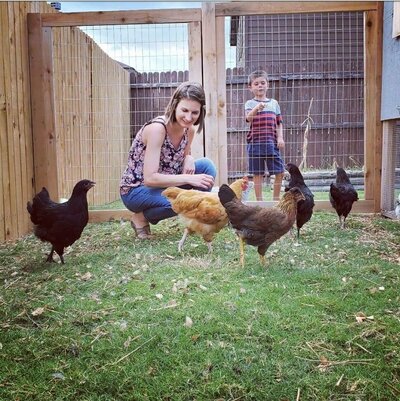
Today, through The Holistic Dietitian, I help women better understand the patterns behind how they feel.
My work combines traditional nutrition science with a functional approach to women’s health, looking at hormones, thyroid health, fertility, digestion, mineral balance, stress, and the foundations that support the body as a whole.
The goal is not simply another protocol. It is to understand your body well enough to know what it needs.
Where I am today
2026

I began studying functional nutrition and learning to look beyond isolated symptoms.
Instead of asking only what someone should eat, I became increasingly interested in why certain patterns were developing and how digestion, hormones, blood sugar, minerals, stress, and nutrient status could influence one another.
It became the foundation of the way I practice today.
Discovered Functional Nutrition
2015

My own struggles with acne and hormone imbalances led me to look deeper at blood sugar, stress, and cortisol, and see how interconnected the body really is.
That shift changed the way I thought about nutrition.
everything changed
2014

My formal education gave me a strong foundation in nutrition science, physiology, clinical nutrition, and evidence-based practice.
It also taught me how much there is still to learn when we move beyond textbooks and begin working with real people whose symptoms rarely follow a perfect pattern.
Registered dietitian
2010
My path to functional nutrition
HOW I GOT HERE


symptoms are information
A few things that guide everything I do
what I believe
the foundations matter
Nutrition should be individualized.
They deserve our attention, but they are rarely the entire story.
Food, digestion, blood sugar, minerals, sleep, stress, movement, and everyday habits can profoundly influence how the body functions.
The foods, strategies, and support that work beautifully for one woman may not be what another woman's body needs.
understanding creates confidence
My goal is for you to leave our work together knowing more about your body than when we started.

Amy Gonzalez, RD, FNTP
My work combines traditional nutrition science with a functional nutrition approach to women's health, using nutrition assessment, health history, laboratory data, symptom patterns, and functional testing when appropriate to guide individualized recommendations.
The science behind the approach
EDUCATION + TRAINING